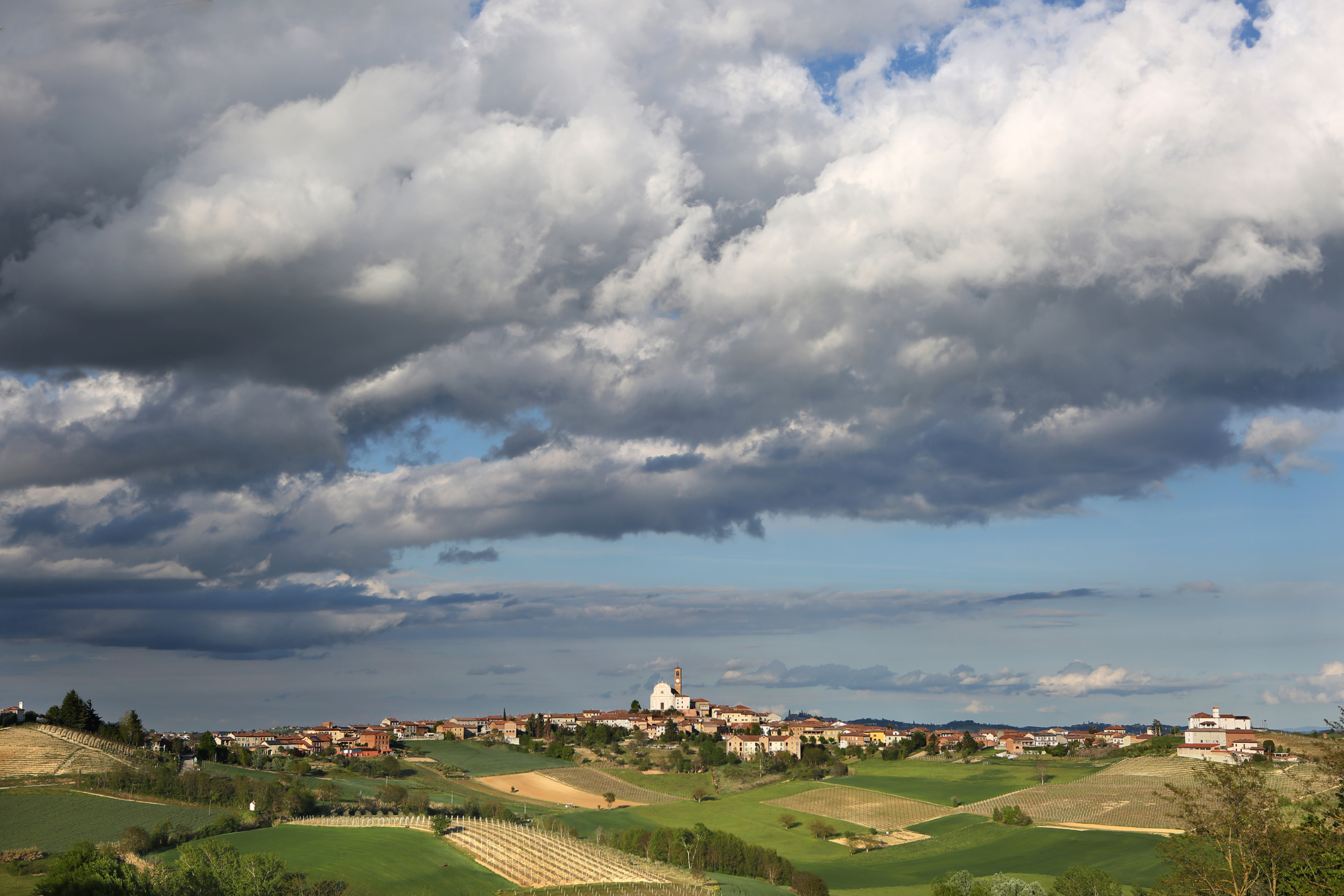
The small village of Grana takes its name from the Grana stream, which flows through the clay hills covered with vineyards on which Moncalvo and Grazzano are perched.
Today home to around 600 residents, Grana is experiencing a revival thanks to a growing number of foreigners who have purchased historic palaces and farmhouses, transforming them into private homes or hospitality structures.
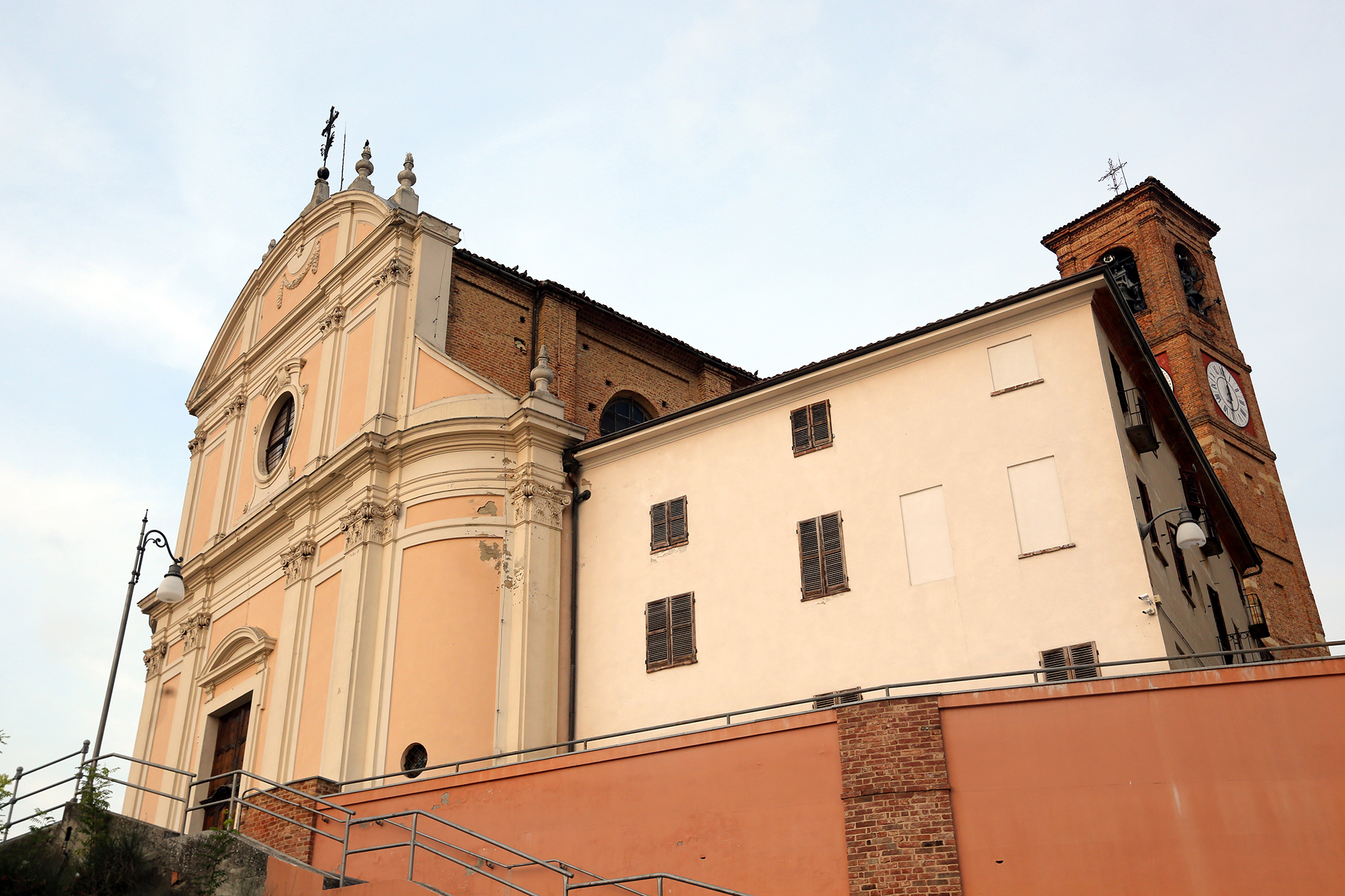
The village has ancient origins, already present in Roman times. Historical documents preserved in Grana’s land registry allow us to trace the village’s evolution, recording precise dates and describing old palaces and their functions. From the medieval period onward, Grana shared in the historical events of the wider region. Around the 13th century, the village developed its intricate spiral-shaped street layout, which culminated in the medieval castle—later replaced in 1771 by the imposing parish church of Santa Maria Assunta.
The church, in a late Baroque style, houses a collection of sacred relics from different periods and origins in a dedicated room. It also hosts the Museum of Liturgical Furnishings and Sacred Art. The large bell tower holds eight bells, each with its own name. The largest, weighing 970 kilograms, is called Campanum, followed by Dutrina, Mezzana, and the others. For centuries, the bells have served specific functions, their differing tones signaling the approach of a storm, marking Good Friday in memory of Christ’s death, or announcing the passing of a villager.
Of the original fortified structure, a massive red-brick wall remains, now colonized by caper plants. Other notable religious sites include the Church of the Annunziata, dating from the 17th century but likely older, Sant’Antonio, and San Rocco, originally built in a secluded location and used as a quarantine station during the 1629 plague, as well as the Chapel of San Silverio.
A highlight of the parish church is the permanent Nativity scene by Nino di Muzio, featuring 329 figurines spread over more than 100 square meters, open for visitors to admire.