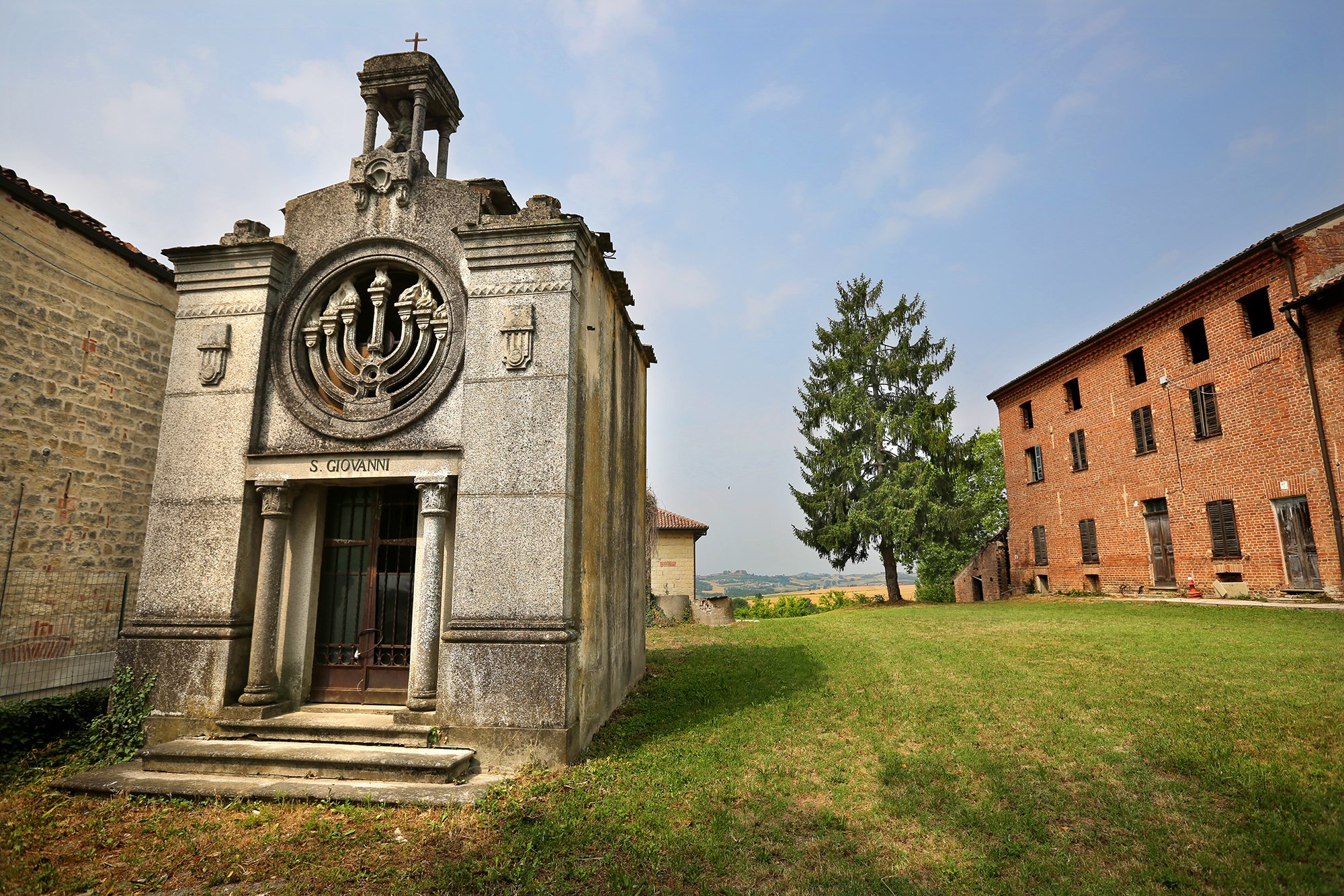
Altavilla stands atop a hill just over 250 meters high, commanding a view over the Grana stream valley. It is a small municipality of 450 inhabitants. Like many villages in this area, it has an ancient history: by 1320 it had a castle and was surrounded by walls, of which only a few traces remain today.
The village retains a strong agricultural character and, surrounded by lush greenery, offers numerous hiking trails that wind through the surrounding hills.
In the nearby hamlet of Cittadella, visitors will find a unique museum dedicated to the steam and electric trains that once served the area. The museum was established thanks to the Ecomuseo Basso Monferrato Astigiano (BMA) association. Housed in the ARFEA autoservizi depot, a structure dating back to the early 20th century, it displays a variety of artifacts and vehicles while hosting events that celebrate what was a true revolution for local farmers: the arrival of rail transport.
Altavilla is perhaps best known for the Mazzetti d’Altavilla distillery, the oldest grappa distillery in Piedmont. Its story began in 1846 with Filippo Mazzetti, well before the unification of Italy. The original distillery was located in Montemagno, a few kilometers from Altavilla, where the practice of transforming pomace—then considered a mere by-product of winemaking—into grappa began. This marked the start of both the distillation tradition and the long history of the Mazzetti family business, which has since crossed national borders. Now in its sixth generation, the family continues to uphold traditional methods at every stage of production, including the careful selection of pomace sourced from Piedmont’s most renowned vineyards.
The distillery’s headquarters occupy a prestigious historic building, originally a monastery, which houses the production facilities, cellars, and a splendid tasting and sales area. The village has also become home to an innovative restaurant, Materia Prima, where grappa is incorporated into the cuisine. Guests can enjoy guided tours along with highly engaging and unique tasting experiences.
Another important distillery in the village shares the same ancient family origins but chose to pursue distillation independently. Also part of the Mazzetti family, this branch founded the Antica Distilleria di Altavilla. Within its charming premises—imbued with an old industrial atmosphere—visitors can explore the distillery, the cellars, the shop, and a fascinating museum entirely devoted to grappa.
Finally, a distinctive curiosity in Altavilla is its Statue of Liberty, part of the local war memorial. The sculpture was designed and built by Heitor da Silva Costa, the architect behind Christ the Redeemer in Rio de Janeiro, Brazil.